In the AI Era, the Way I Work Has Completely Changed

-
공유하기 선물하기



Interview with Gamma AI Senior Product Designer Chaemin Ahn
'AI native' startup Gamma shakes up big tech
Create and test prototypes yourself
What remains is ultimately 'human intention' and direction
"It's already been over 4 to 5 months since I last used the design tool Figma. Eighty percent of my daily routine is spent directly in Claude Code, prototyping and testing."
The AI innovation that hit Silicon Valley developers is rapidly spreading into adjacent areas. A major shift is happening in the world of design, as code writing is now entrusted to AI coding agents, while humans mainly take on judgment and verification roles.
The changes in work styles brought about by AI adoption first affected software developers. As code-writing speed increased rapidly and quality improved, entrusting coding to AI became the mainstream. According to Google CEO Sundar Pichai, even within Google, where the world's top developers gather, AI agents write 75% of new code.
👉 "75% of new codes generated by AI"... The future shown by Google's 'Gemini Agent Platform'
The key point is that the AI-driven work revolution is not limited to the development domain. In Silicon Valley, non-developers are also using AI to improve work efficiency or turn their ideas into reality through AI coding, making it a daily routine. Designers who work closely with developers are prime examples.
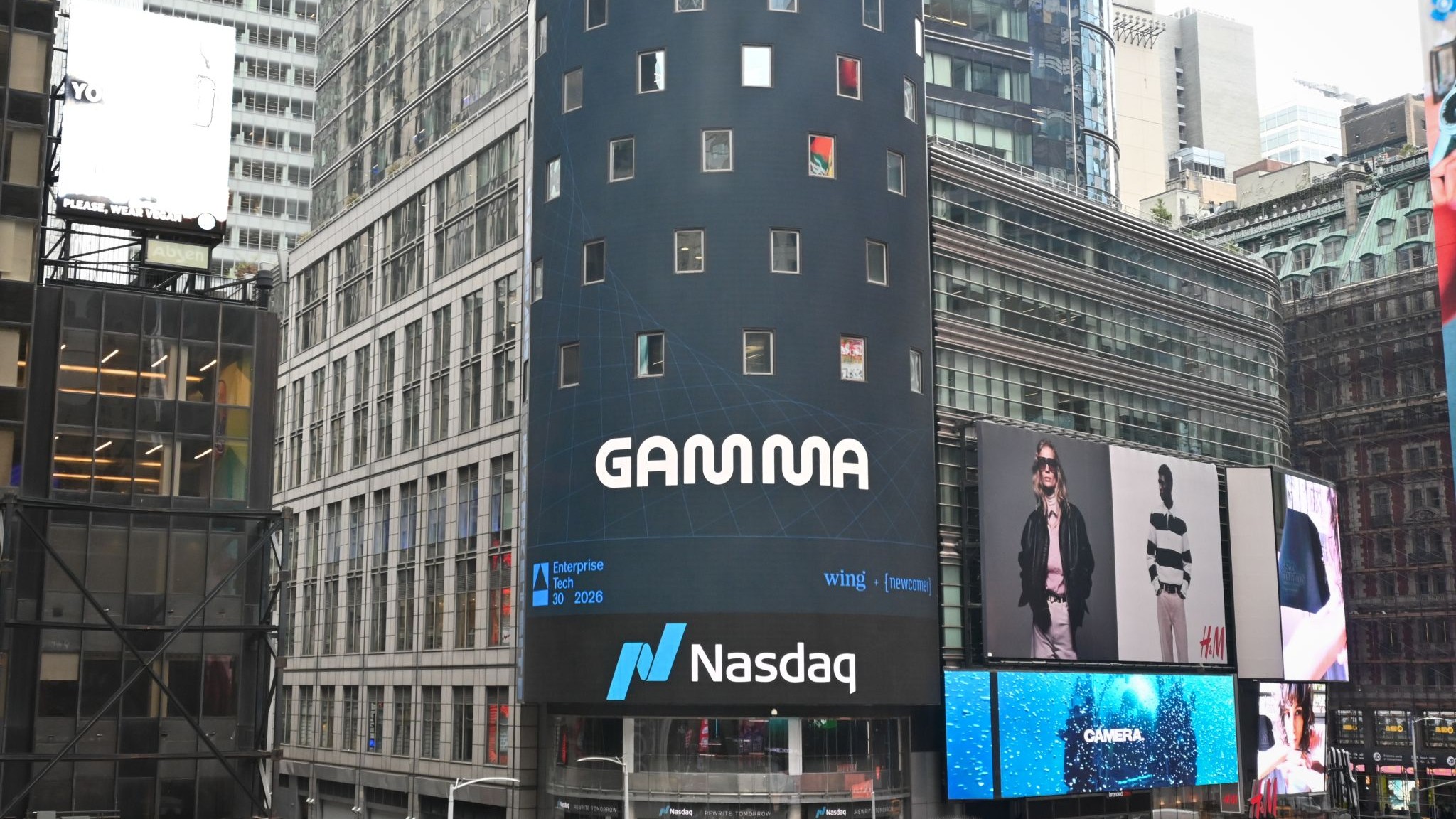
'AI Native' Startup Gamma Shakes Up Big Tech... With 50 Employees, the Company is Valued at 3.1 Trillion KRW
Founded in San Francisco in 2020, Gamma is considered one of the key companies driving AI-driven innovation, especially in the design sector. With a single product—an AI-based presentation generation tool—it secured over 100 million users as of May 2026.
On the Gamma platform, over one million AI-based pieces of content are generated daily. So far, users have created over 400 million presentations, documents, and websites on Gamma.
The company experienced explosive growth after a full pivot to an 'AI native' service at the end of 2022. In November 2025, it achieved an annual recurring revenue (ARR) of $100 million (about 149 billion KRW) and succeeded in raising $68 million (about 101.3 billion KRW) in Series B funding led by Andreessen Horowitz (a16z), Silicon Valley's largest venture capital firm. It was the moment the company was recognized with a corporate valuation of $2.1 billion (about 3.1 trillion KRW) just five years after its founding.
Even more surprising is the number of employees relative to its corporate valuation. At the time of its late-2025 funding round, Gamma had about 50 employees. A small organization that could comfortably fit in a single bus has shaken up the presentation tools market, which had long been dominated by Big Tech. It competed head-on with Microsoft's PowerPoint and Google Slides—companies with workforces dozens of times larger—and received an enthusiastic response from users.
What is the secret behind Gamma's rapid growth? How does the AI-native company utilize AI, and how do its employees work? What kind of value should designers create in the AI era?
Chaemin Ahn, the Senior Product Designer in charge of AI & Innovation, joined Gamma in June 2025 and is the company's first and only dedicated AI product designer. Currently, he is leading the integration of content creation experiences and the advancement of AI agent memory and context.
The agent feature he led in designing processed over one million messages within the first 24 hours of its launch. Over 90% of interactions were actual content editing tasks, not simple browsing or casual conversations. AI features have become practical tools that go far beyond mere curiosity.
We met Designer Ahn, who is at the forefront of this shift, via video interview to ask about the innovation know-how of AI-native companies and the future of work and careers.
👉How did Gamma become a '3 trillion won unicorn'... How to Seize Opportunities in the AI Era
Insight (1): How AI product designers work with AI
Q: If you had to describe what kind of company Gamma is in one line,
A: Gamma is an AI-native presentation platform. Currently, there are about 90 employees, but when I joined, there were fewer than 50. In terms of scale, it competes with Microsoft, Google, and Canva. More than 100 million users worldwide use Gamma.
Just as Cursor redefined the coding experience as AI-native, Gamma is a company that redefines the experience of visually conveying ideas as AI-native.
👉 "The organization disappears"... A company without a company in the AI era shown by Cursor
Q: What is a typical daily routine for an AI product designer?
A: About 80% of my time is used for prototyping in Claude Code. Although I am a product designer, it has been over 4 to 5 months since I last used Figma. The prototype is presented to the user and tested, and this cycle of further development is continuously repeated.
The remaining 15% is allocated for alignment within the AI team, and about 5% is used for one-on-one conversations with other team members. My projects are affected not only by the AI team but by other teams as well, so good communication is essential.
Q: What do you think is the reason Gamma has been able to grow so quickly against strong competitors like PowerPoint and Google Slides?
A: I think the most important factor is that Gamma is a 'design-centered organization.' When it pivoted to AI in 2022, several competitors were developing services similar to Gamma. But those competitors have all disappeared from the market now because they failed to provide users with the variety of options they wanted.
People want design options they can choose from. In Gamma's case, the team had a high ratio of designers; we had three designers even when the team only consisted of 12 members.
Designers talk with users weekly and gather opinions from the user community. For example, they have continuously expanded the variety of features like 'Smart Layout.' Inside Gamma, this is called 'Visual Variety.' This diversity of choices is still considered very important by the company.
Insight (2): Create and test prototypes yourself... Break the mold of the work domain
Q: What recent AI trends have you noticed in Silicon Valley?
A: One of the biggest topics is context. Within context, there are two main aspects: one is the length and amount of context given within a session, and the other is the continuity of context.
When a session resets, the next task must start completely from scratch. This is currently a major pain point for many people. Because of this, many related solutions and ideas are emerging in the industry.
Second, the boundaries of roles are disappearing. If AI's first use case was coding, now roles are increasingly blending together, and everyone is becoming a builder. Within Gamma, marketers do "vibe coding," and product managers (PMs) bring in designs that are functional prototypes themselves..
👉 [Report] "Just one line and the game goes straight away"... Silicon Valley's 'Vibe Coding' Craze
Q: In the age of AI, how will the role of designers be redefined?
A: Some say 'craft' is a designer's ultimate weapon, but I disagree. Personally, I don't think it's difficult for AI to learn crafting. Creating visually beautiful or highly functional things is an area where AI will easily excel.
Once you strip everything else away, what remains is probably 'Human Intent' and direction. Whether you are a designer, a PM, or an engineer, the most important ability going forward will be guiding AI in the right direction and helping it make the right decisions.
Personally, I felt a sense of loss for a couple of days when I realized AI was replacing the design work I used to do. Claude's model really started to improve around Christmas last year, and for the first two days, I thought, 'This AI is going to take all my work.' But after assigning it more complex tasks and using it more deeply, I realized that the capabilities of the person using the AI are what truly matter.
Q: You mentioned you're currently leading two projects—is that in the same context?
A: Yes. The content creation experience integration project and the agent memory and context enhancement project are both aimed at improving the quality of the outputs delivered by AI agents.
The agent-based content creation experience is a concept where users express what they want to create, and the agent determines the optimal format and structure to create it. As of May 2026, the first version, 'Create with Agent,' was released as a beta concept to a small number of users. This feature is scheduled to be upgraded in stages.
Projects that give agents memory and context allow them to remember past tasks and user preferences without needing everything explained from scratch, helping them understand the user better over time.
The key is that agents must clearly understand the user's intent to deliver good results. When a user makes an ambiguous request and you cannot refer to or guess the context of the previous interaction, it is better to ask directly. We realized that the fundamental principles of human-to-human communication must be directly applied to AI design.
Insight (3): User engagement and speed are the driving force... Don't be afraid take action, learn from experience.
Q: How do you respond when companies like Big Tech or OpenAI launch competing products?
A: I think there are two main strategies.
The first is close engagement with users. Gamma designers conduct user interviews once or twice a week. Even while projects are in progress, they don't stop; they continuously run about 10 tests at a time.
We work so closely with them that we intimately understand their every need. The second is speed. Because Gamma is small, it can move faster. Recently, the whole team has been discussing, "How can we move forward faster?"
If you have any assumptions, you need to confirm as soon as possible whether they are wrong. You quickly identify what is incorrect, reorganize your responses, and reach the correct solution even faster. If there were any other magical formulas besides these two, I'd love to use them, but ultimately, I believe these two are the key factors that determine success or failure.
Q: What advice would you give to junior designers who fear the AI era?
A: First, you need to figure out what you like. Is it better to create something visually stunning, or is it better to build a real solution? From now on, these two career paths will diverge sharply.
If you're someone who wants to build solutions, I want to mention two things. First, don't be afraid to start building or using new tools. A common trait among successful entrepreneurs in Silicon Valley is their willingness to try things and learn from those experiences.
Second, do not neglect the fundamentals of design. Without principles like First Principles Thinking (which involves breaking down the most basic units of a fact and redesigning their combinations) or Design Thinking, it's easy to become someone who is simply swayed by AI's decisions.
You need to have your own intent and set a clear direction to build good solutions. And generally, I hope you don't get too scared. Even though I don't know how to code properly, it took me less than a month to go from 99% using Figma to 100% using Claude Code. If you start preparing now, you can learn much faster.
Q: What are your personal goals going forward?
A: I think AI UX (user experience) is still in its infancy. There are many aspects that remain unresolved, and the potential for development is enormous.
In the next 3 to 5 years, I want to be one of the people who defines this new paradigm. What Gamma does is part of that effort. As someone who experienced the practicality of AI early on, my ultimate goal is to create things that truly help people.
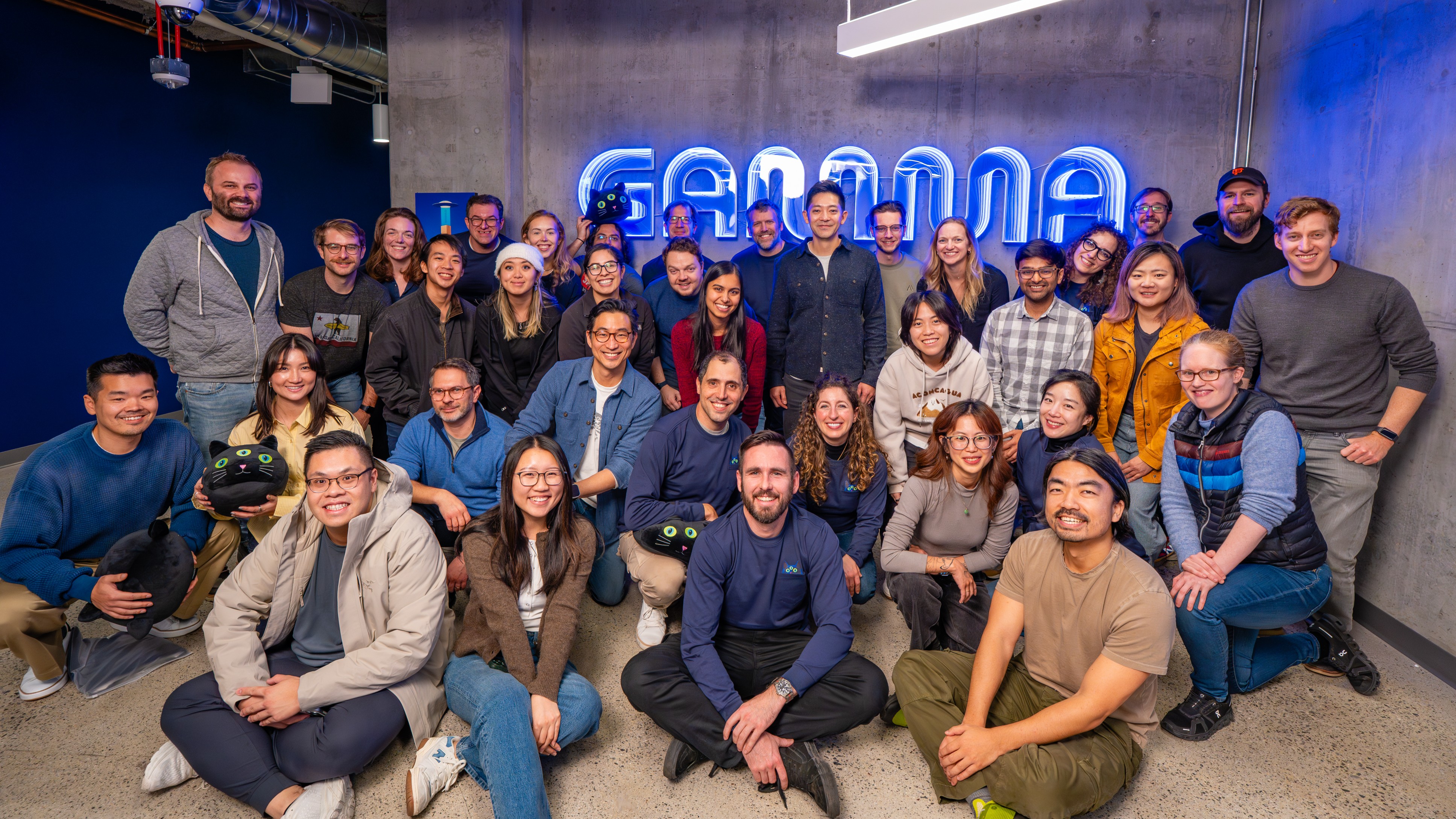
Who is Chaemin Ahn, the Gamma's Senior AI product designer?
Designer Ahn was born in Germany and grew up in Korea from the age of ten. He returned to the United States 10 years ago. He started with industrial and furniture design, then pivoted to digital.
After earning his master's degree at the IIT Institute of Design in Chicago, he participated as a founding designer for three startups at BCG Digital Ventures, a venture studio under BCG in New York. In 2024, he also co-founded an AI-based startup called Skipper. He has been working at Gamma since June 2025.
Designer Ahn cited his colleagues as a major reason for joining Gamma. He noted that when he met the people working there, he found them all to be incredibly creative, energetic, and smart.
"When I left my previous company, I set two criteria. First, it had to be a company that solved problems I could genuinely be passionate about, and second, I needed to have a strong feeling that I could truly enjoy working with the people there," he said. "After finishing the Gamma interview, I walked out, and instead of feeling drained, I actually felt more energized. That was a first for me."
His past experience working extensively with PowerPoint also influenced his career decisions. He said, "Everyone has probably experienced the pain of working in PowerPoint," and added, "At my first job, I had to create one or two presentations a week, so the problem Gamma was trying to solve really resonated with me."