Sanofi Doesn’t Want AI to Automate Work. It Wants to Reinvent It.

-
공유하기 선물하기


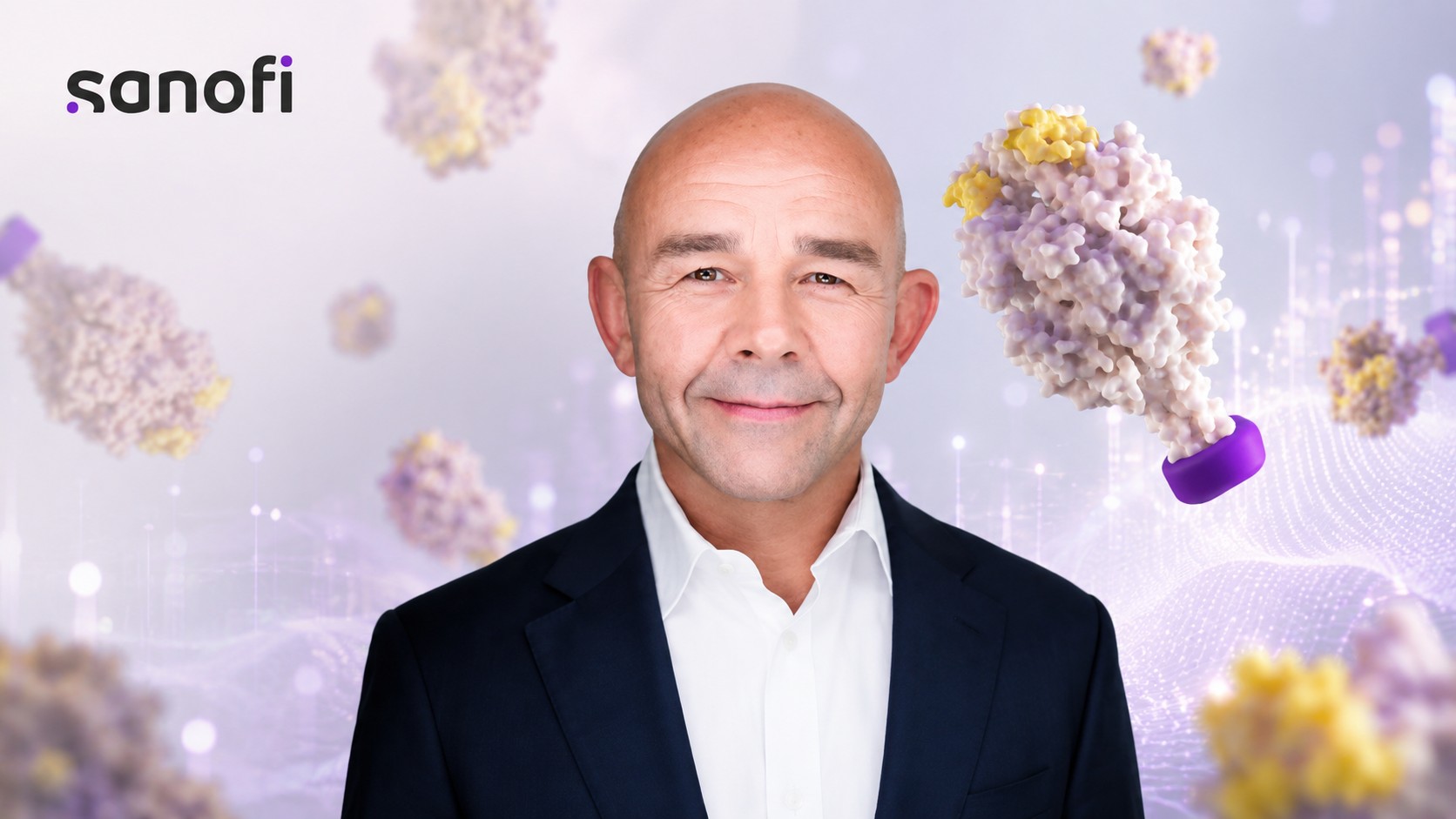
[Exclusive] Interview with Emmanuel Frenehard, Chief Digital Officer of Sanofi
Inside the drugmaker’s push to deploy AI agents across the lab, the back office and its global sales organization.
AI should not be used simply to automate tasks. It should be used to reinvent business processes.Emmanuel Frenehard, Executive Vice President and Chief Digital Officer, Sanofi
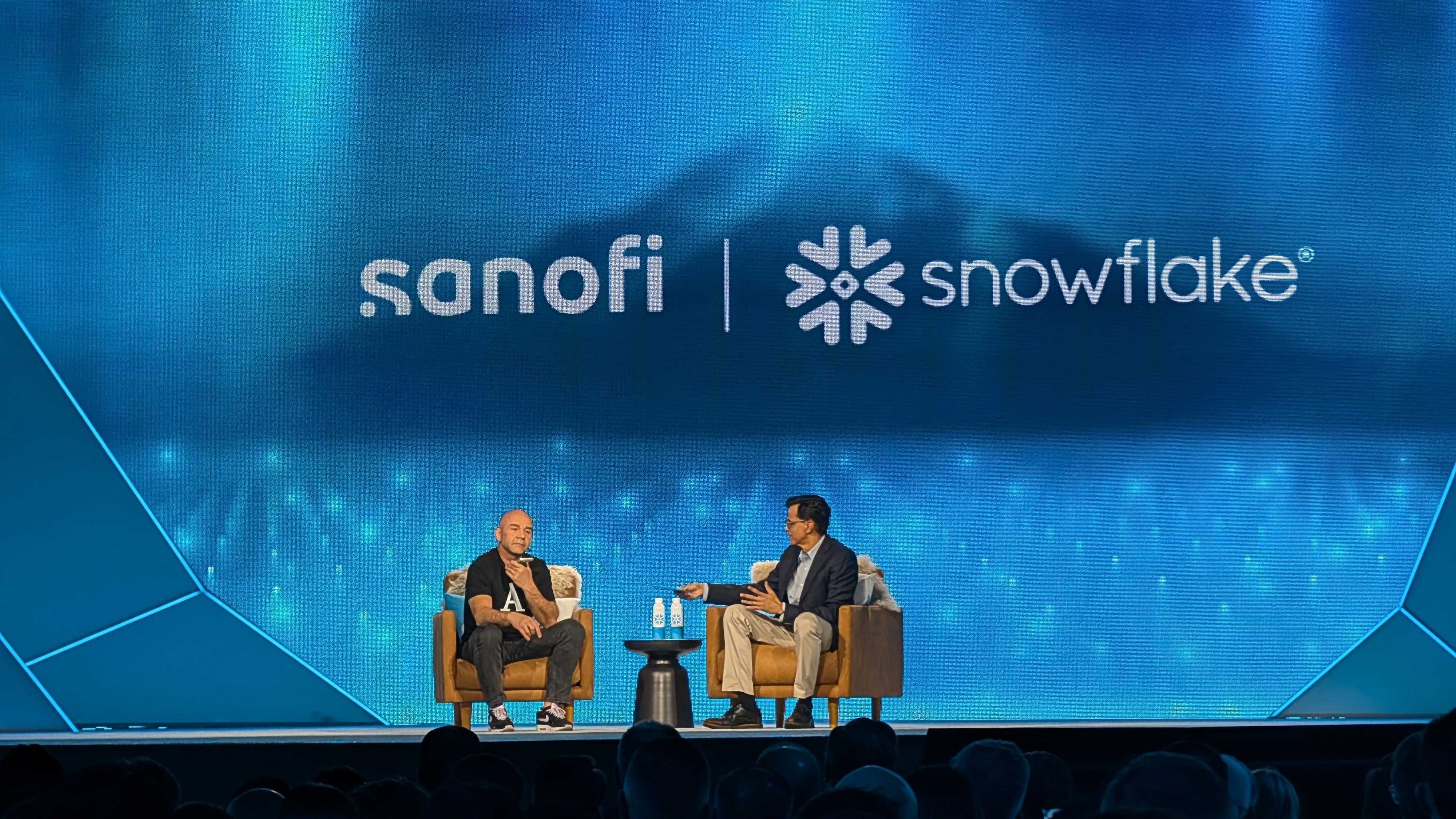
On June 1, at San Francisco’s Moscone Center, a speaker at the opening keynote of Snowflake Summit 2026 gave the audience a glimpse of how AI agents are beginning to reshape the pharmaceutical industry.
“Imagine that you are a sales representative preparing to meet a physician,” said Emmanuel Frenehard, Sanofi’s Executive Vice President and Chief Digital Officer. “You call up Sanofi’s internal AI agent, Concierge, and say: ‘I’m about to meet Dr. Hannah. Help me prepare for the meeting.’”
During the live demonstration, Concierge immediately produced a briefing on the physician’s prescribing patterns, clinical interests and potential conversation starters. Research and verification that once took hours could be completed in seconds through just a few questions.
The demonstration showcased Concierge for Field, an AI agent developed by Sanofi in partnership with Snowflake. The tool gives Sanofi’s field representatives immediate access to relevant information before they meet physicians or visit healthcare institutions.
Founded in France in 1973, Sanofi is one of the world’s largest biopharmaceutical companies, generating €43.6 billion in annual sales in 2025. Its principal therapeutic areas include immunology, neurology, oncology, rare diseases and vaccines. Dupixent, whose active ingredient is dupilumab, is one of its leading medicines.
What has drawn particular attention from the AI industry is not simply Sanofi’s adoption of artificial intelligence, but the speed and scale of its transformation. The company has set out to become the first biopharma organization powered by AI at scale. To support that ambition, it has brought IT, data, AI, cybersecurity, infrastructure and digital capabilities together under a unified organization.
Frenehard is one of the executives leading that transformation. Before joining Sanofi, he led digital and technology initiatives in the media and entertainment industry, including roles at Walt Disney International and Southeast Asian streaming company iflix. At Sanofi, he has sought to embed a culture of measurement, experimentation and rapid execution across the organization.
As AI transformation and enterprise agents become central issues for legacy companies, The Miilk sat down with Frenehard in San Francisco to discuss what Sanofi is changing, how it is approaching the transition and what other companies can learn from its experience.
Below is an edited transcript of the interview.
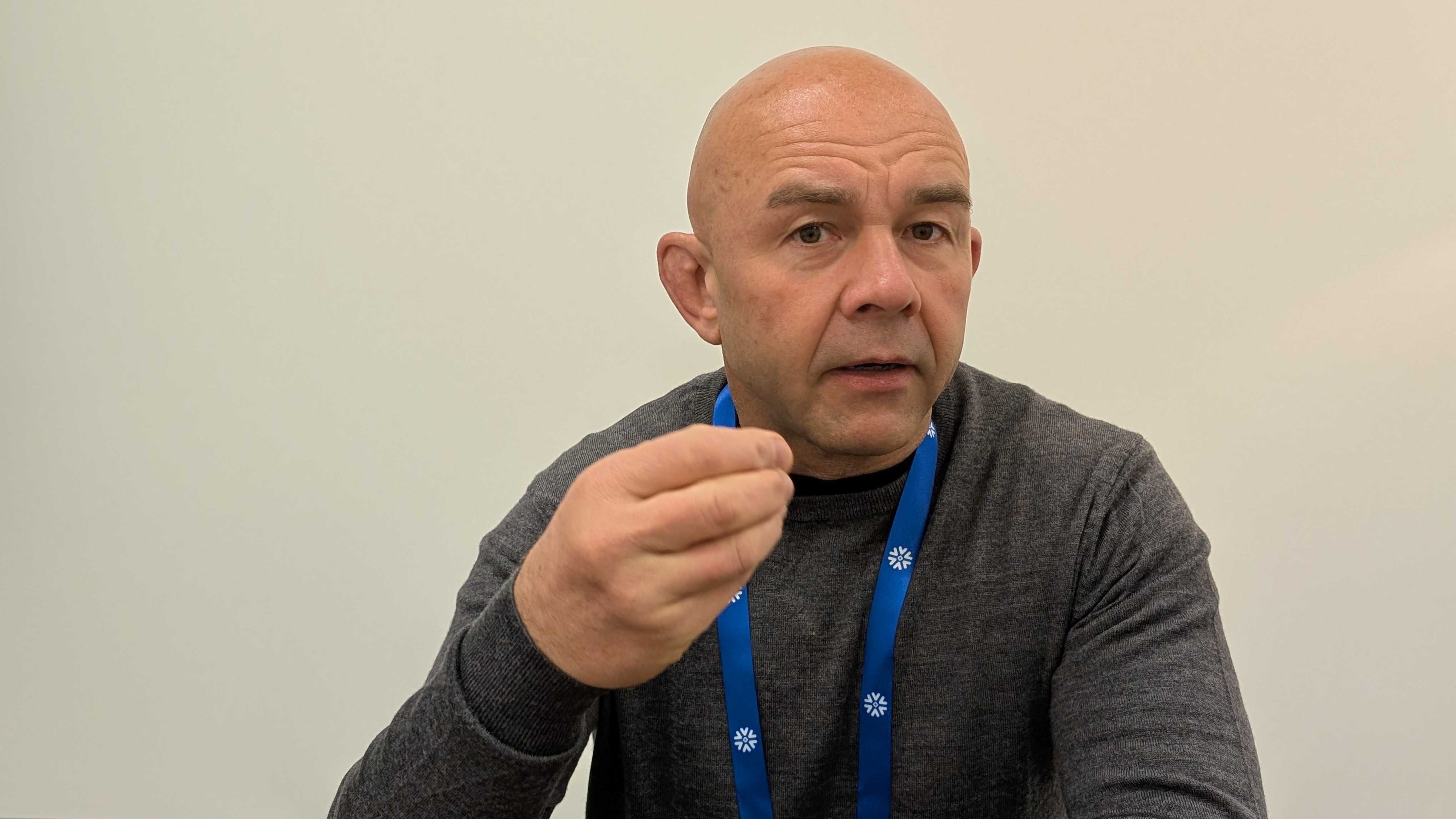
“Set Bold Ambitions”: Bringing Together More Than One Billion Data Points
Q. Sanofi has said it wants to become the first biopharma company powered by AI at scale. How far have you progressed toward that goal?
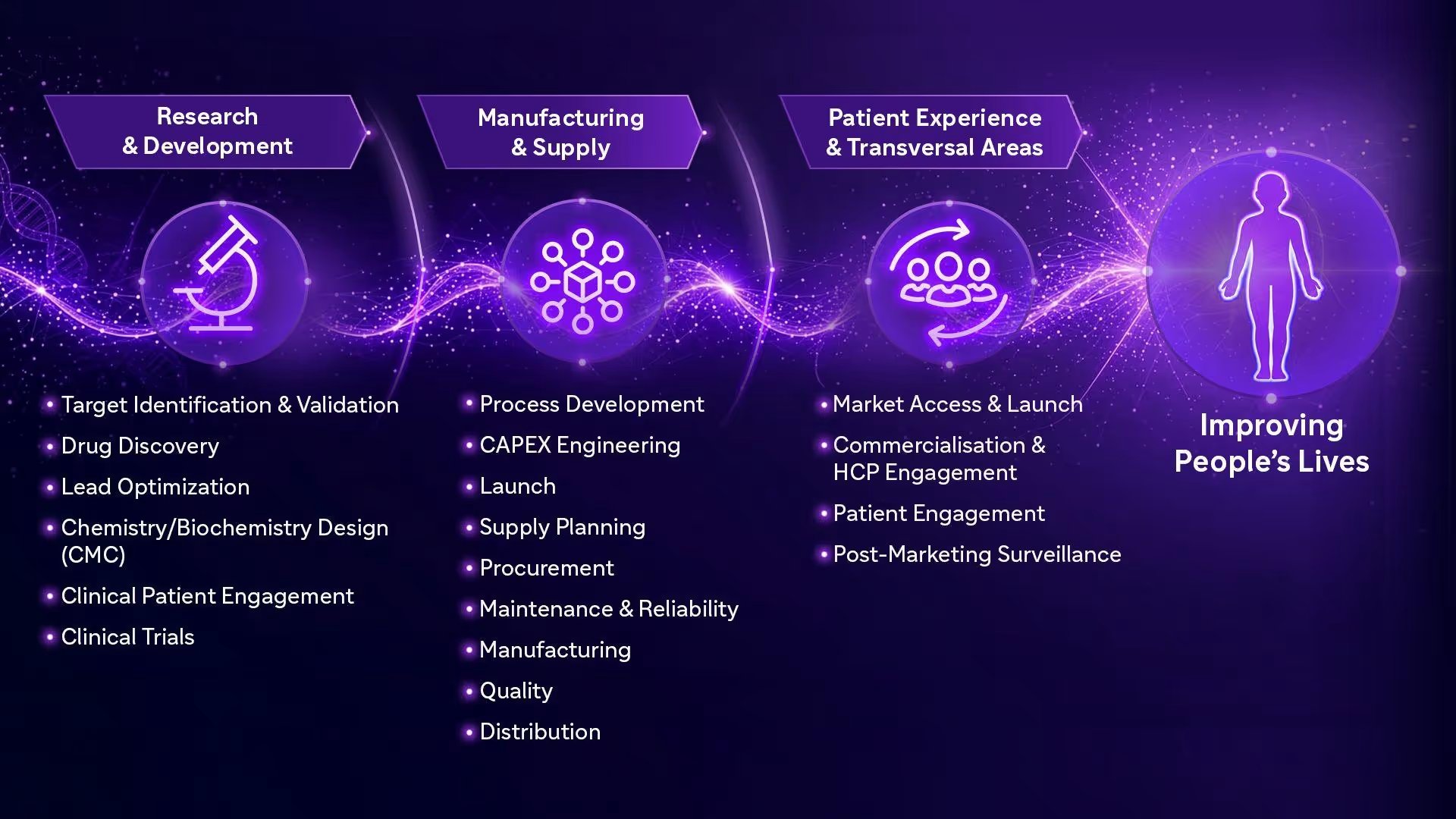
Frenehard: Sanofi is a pharmaceutical company, and the process of discovering a medicine and bringing it to market is extremely long and complex. On average, it takes approximately 10 to 12 years for a new medicine to reach the market.
When we say that Sanofi is “all in on AI” and that we want to become the first biopharma company powered by AI at scale, we mean applying AI throughout the entire medicine-development journey.
We are using AI across drug discovery, clinical development, manufacturing and commercialization. The objective is to accelerate each stage, improve decision-making and ultimately help medicines reach patients more quickly.
When an organization sets a bold ambition, the entire company begins moving in that direction.
Q. Sanofi’s internal AI platform, plai, is reportedly used by more than 30,000 employees and has significantly accelerated decision-making. What was the greatest challenge in encouraging employees to adopt it?
Frenehard: plai is a platform we developed with Aily Labs. It is designed to give employees easy access to AI-generated insights, recommendations and predictions.
Those insights can support many kinds of decisions. They may concern the procurement of raw materials, the allocation of a product to a particular market or decisions related to clinical trials. Today, plai brings together more than one billion data points.
The fundamental objective is to make data accessible to everyone.
Companies typically pass through several stages as they adopt AI. The first is data integration. Because we operate with such a vast amount of information, we consolidated our data into a centralized data platform with the help of external technology partners.
The next question was: How do we make that data genuinely useful?
Data can still be difficult for employees to interpret and apply. We therefore made the experience interactive. Employees can receive recommendations, respond to them and evaluate whether those recommendations produced the expected results.
Imagine, for example, that sales of a product are strong, but procurement volumes for one of its raw materials are too low. plai can warn the user: “Sales are performing well, but if raw-material supplies remain at this level, inventory may run out.”
Sometimes the platform confirms something the user already suspects. In other cases, it identifies a risk the user had not seen.
We also designed plai as a mobile application so employees throughout the organization could access and use it easily.
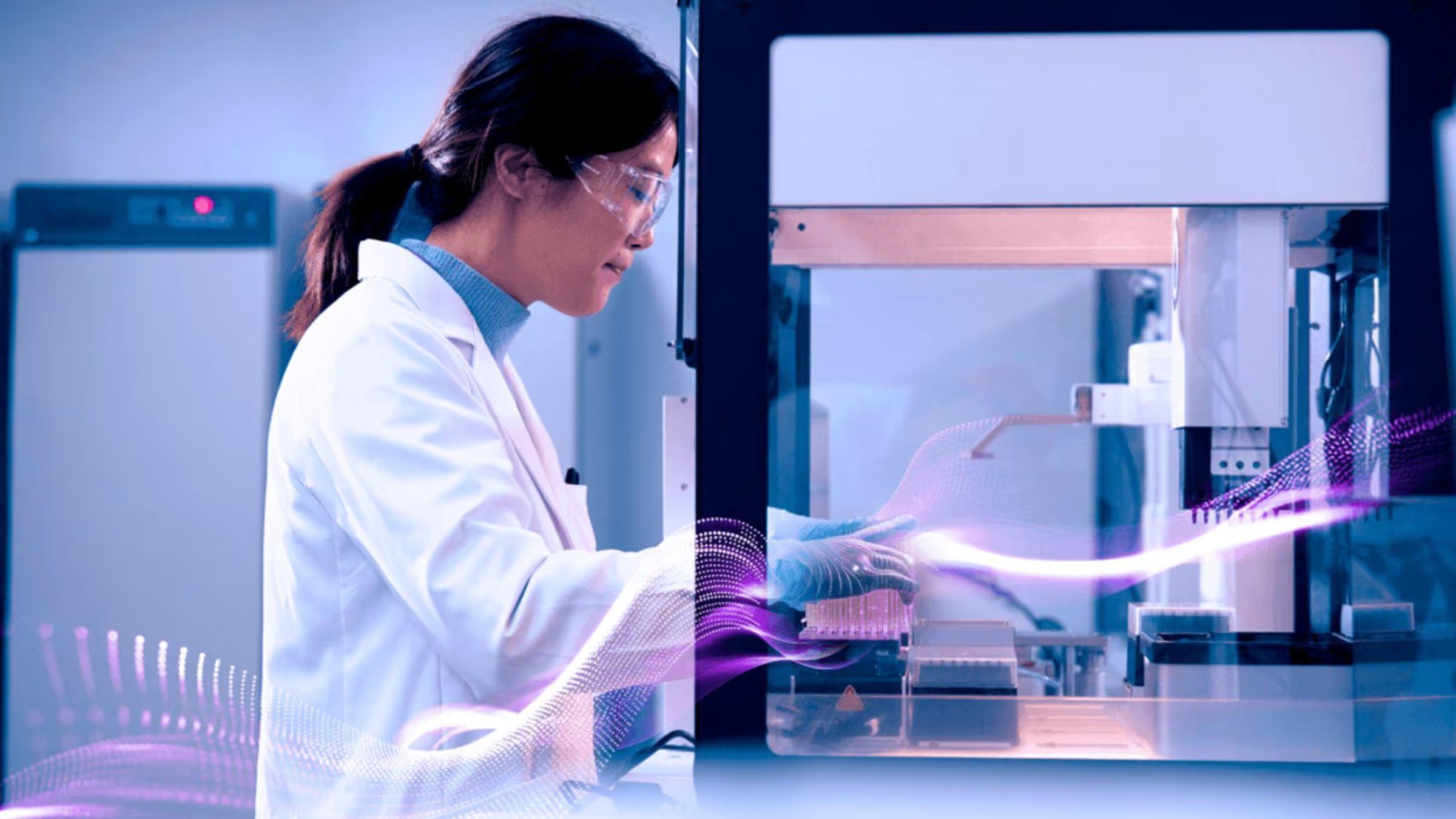
AI Augments Scientists Throughout Drug Discovery—but Humans Remain in Control
Q. Could you give us some specific examples of how Sanofi uses AI in drug development?
Frenehard: AI is particularly valuable during drug discovery.
More scientific research is being published today than at any previous point in history. No individual scientist can read every relevant paper. We therefore use AI to analyze large bodies of scientific literature and identify patterns, relationships and areas of agreement across different studies.
Suppose researchers have a hypothesis that a particular gene is associated with a deficiency or disease. AI can help them review and validate the body of research related to that hypothesis.
The next step is to design molecules that can address the underlying biological problem. The molecules we develop are intended to act on specific biological targets rather than affect the entire body. At this stage, AI models can help simulate whether a molecule is likely to bind to the intended target and produce the desired effect.
We also work with BenchSci, a life-sciences AI company whose technology can function as an AI laboratory assistant.
Sanofi was founded more than five decades ago, and a substantial amount of our historical experimental data has now been digitized. Using AI and digital-twin technology, researchers can simulate how a drug may affect a virtual liver and assess potential toxicity before proceeding further.
We are also collaborating with QuantHealth, which specializes in AI-based clinical-trial simulations. Its technology enables us to use existing data to estimate potential outcomes before an actual clinical trial begins.
AI plays a role throughout this process, but humans remain in charge. Scientists review the results, assumptions and predictions at every stage.
Q. In a workplace where people are increasingly augmented by AI, what should companies focus on?
Frenehard: I do not believe AI should be used merely to automate individual tasks. It should be used to reinvent business processes. Automating a task and reinventing a process are fundamentally different things.
Human beings are very good at improving something that already exists. Give someone a car and ask them to make it faster, and they may change the tires, replace certain components or install a more powerful engine.
But ask them to design an entirely new form of transportation capable of winning the race, and the challenge becomes much more difficult.
That is where AI should be applied. We should not use AI only to perform existing tasks more efficiently. We should use it to make possible entirely new ways of working that were previously unavailable to us.
This is why Sanofi has partnered with Snowflake and workflow technology company Elementum to redesign business processes from the ground up.
Consider procurement. Our goal was not simply to insert AI into the existing purchasing system. We changed the way employees interact with the procurement process by introducing an AI concierge.
Like a concierge at a five-star hotel, the agent allows an employee to explain what they need in natural language.
An employee might say, “I need the following chemicals for an experiment. I have purchased them before.” The AI can retrieve the employee’s purchase history, identify the relevant items and initiate the ordering process.
Concierge Is Transforming Procurement, IT Support and Field Sales
We Expect Hundreds of Millions of Euros in Additional SalesEmmanuel Frenehard, Executive Vice President and Chief Digital Officer, Sanofi
Q. Could you explain in greater detail how these business processes are changing?
Frenehard: In every large company, employees depend on numerous systems to perform routine activities such as purchasing supplies, requesting leave or obtaining IT support.
Large enterprises may operate thousands of different systems. As a result, their data becomes fragmented across applications and departments.
About a year ago, we asked a different question: “Could an AI agent operate directly on top of the data platform rather than being confined to an individual application?”
Once we began thinking that way, we could redesign business processes around the unified data layer.
For example, we developed AI capabilities that can analyze invoices and purchase orders. This creates much greater transparency across supply, procurement and sales, allowing relevant information to be viewed and assessed together.
Sanofi spends approximately €18 billion annually on procurement. We believe an agent-based approach could generate savings of tens of millions of euros.
The same principle applies to IT support. Sanofi’s approximately 75,000 employees will increasingly be able to resolve support issues through Concierge rather than calling or emailing an IT service desk.
We are designing the system to handle approximately 80% of common IT-support requests through AI agents. In this area alone, we believe the company could save more than €10 million in support costs.
For field sales teams, we expect Concierge for Field to contribute hundreds of millions of euros in additional sales.
Q. Have you applied any lessons from your career in media and entertainment to Sanofi? And how has working in healthcare changed your perspective?
Frenehard: One of the most important things I brought from media and entertainment was a culture of measurement.
In media and entertainment, virtually everything is measured: clicks, views, conversion rates, engagement and box-office performance. The industry is intensely focused on quantifying results.
What I discovered after joining Sanofi was that the pharmaceutical industry did not measure activity in quite the same way.
The commitment to patients was extremely strong, but measuring outcomes and engagement was more difficult. A patient visits a physician, receives a prescription and then goes to a pharmacy to obtain the medicine. A pharmaceutical company does not directly observe everything that occurs throughout that journey.
One perspective I brought to Sanofi was a more consumer- and patient-centric mindset.
Sanofi has introduced digital applications for patients with atopic dermatitis in markets including Japan, Germany and the United States. These tools can help patients monitor their medication, potential allergic reactions, dietary factors and changes in their symptoms.
At the same time, Sanofi taught me something that I had not experienced as strongly in other industries: the profound importance of improving human health.
Improving a person’s life is an extraordinary achievement. The impact of biopharma extends beyond an individual patient; it can also transform the lives of that patient’s family.
That is why I love this industry. I feel a stronger sense of purpose here than in any other industry in which I have worked.
The Miilk’s Perspective: Should AI Improve Existing Work or Reinvent It?
The most thought-provoking element of the interview was Frenehard’s central argument:
“AI should not be used simply to automate tasks. It should be used to reinvent business processes.”
His distinction between automation and reinvention goes directly to the dilemma confronting nearly every company adopting AI today.
Most organizations are initially using AI to perform existing work faster and at lower cost. They are reducing the time required to produce reports, automating customer interactions and accelerating document review.
These efforts can create meaningful value. But to borrow Frenehard’s analogy, they amount to installing a turbocharged engine in a conventional car. The vehicle may move faster, but it remains fundamentally the same vehicle.
The more consequential question comes next: Should a company improve the tires and engine of the existing car, or design an entirely new form of transportation capable of winning the race?
Now that AI has become practically usable, companies must begin experimenting with the latter.
Before automating a task, leaders should ask why that task exists in the first place—and whether the same objective could be achieved through an entirely different process.
Sanofi illustrates the distinction.
Instead of requiring employees to log into one of thousands of internal systems to complete routine tasks, the company is developing an environment in which employees can simply explain what they need to an AI concierge in natural language.
At first glance, this may look like little more than a more convenient interface. But the underlying transformation is far more significant.
Sanofi asked: “Can AI operate directly on top of a unified data platform rather than being attached to individual applications?”
Rather than simply placing AI on top of its existing systems, the company consolidated its data and began redesigning business processes around that unified foundation.
The operating model is shifting from one in which people must follow sequences predetermined by software to one in which AI assembles information and orchestrates actions in response to a person’s request.
That is the difference between improvement and reinvention.
It is also important to recognize that Sanofi’s transformation is not complete.
The expectation that Concierge for Field will generate hundreds of millions of euros in additional sales remains a forward-looking projection. The potential procurement savings of tens of millions of euros are likewise benefits that the company is only beginning to pursue.
Frenehard himself acknowledged that it is too early to claim that Sanofi has become the biopharma company using AI more effectively than any other.
This is not a finished success story. It is an experiment in progress.
Nevertheless, the experiment matters precisely because Sanofi is the company conducting it.
Developing a new medicine and bringing it to market can take 10 to 12 years. Because patients’ lives are at stake, the pharmaceutical industry places extraordinary emphasis on safety, scientific validation and regulatory compliance.
Yet a company founded in 1973 is publicly demonstrating the redesign of core business processes in one of the world’s most highly regulated and risk-sensitive industries.
The fact that major companies in industries where failure carries enormous consequences are making visible bets on AI suggests that agentic transformation is no longer confined to experimental projects inside technology companies.
The lesson for Korean companies is therefore not simply, “Adopt AI.”
It is: “Before adopting AI, decide what you intend to reinvent.”
The first question should not be which model, platform or tool to purchase. It should be which parts of the organization have become rigid because they were designed around the constraints of legacy systems.
As Sanofi’s experience shows, the starting point is usually data.
When proprietary data remains scattered across departments and applications, it is difficult to reinvent a process—and often difficult even to improve it. The accuracy, reliability and relevance of an enterprise AI system ultimately depend on the quality and integration of the organization’s own data.
Companies now have a rare opportunity to redefine how work gets done.
The technology has matured to the point at which practical redesign is possible, and even the most conservative industries have begun to move.
The remaining question is whether each company will treat AI as a tool for refining existing operations or as an opportunity to redesign the work itself.
That choice will determine the competitive gap that emerges over the next several years.