
50 Semiconductor Equipment Repairs, Taught in XR Without a Fab

-
공유하기 선물하기


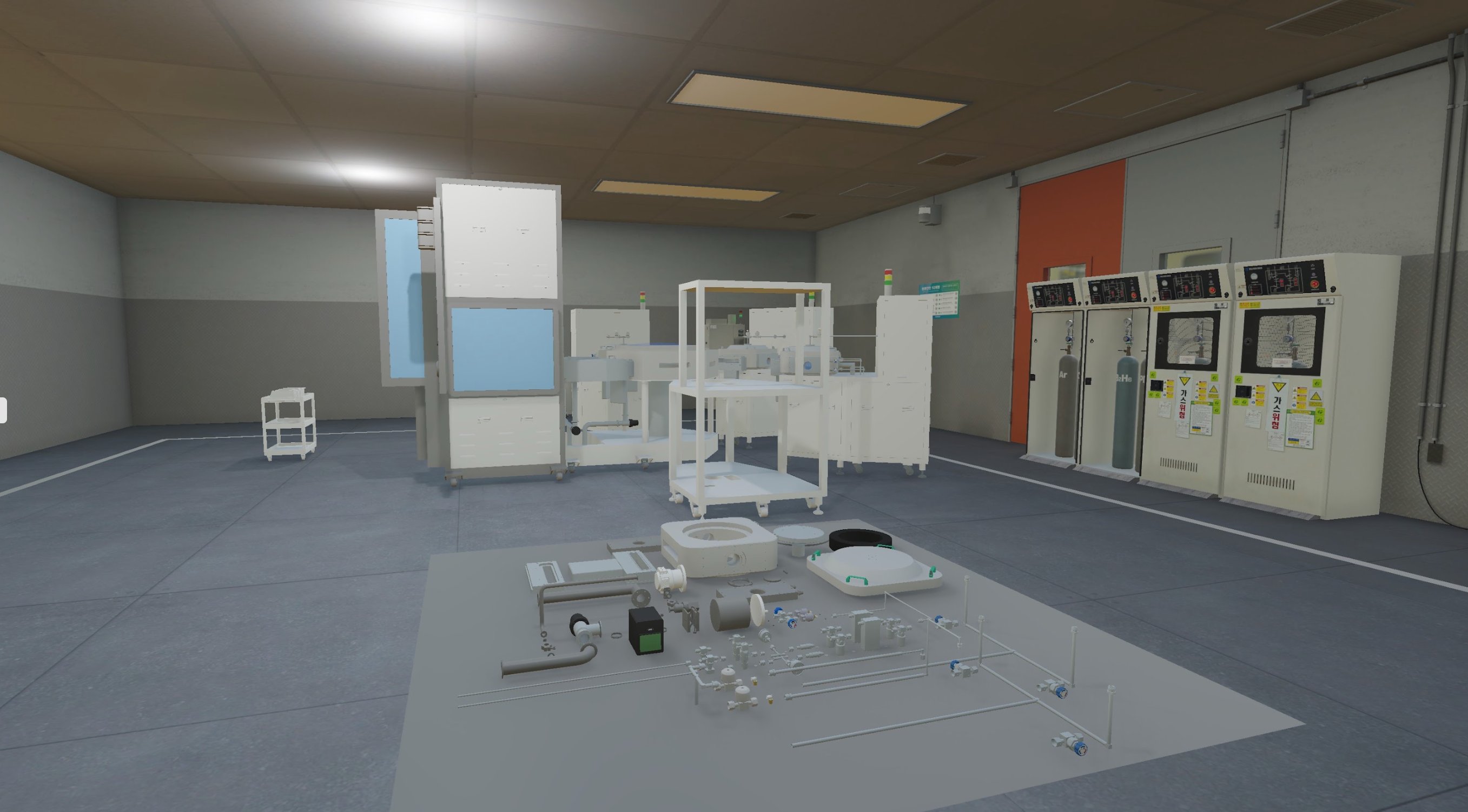
Meshlink's Faraday XR M already runs at Dong-A University and Vietnam's PTIT, with curriculum co-developed by Korea Polytechnic faculty.
BUSAN, South Korea — A South Korean XR platform now trains about 50 semiconductor equipment maintenance procedures without a live fab, as the U.S. heads toward a 26,400-technician shortfall by 2030.
The U.S. Needs 26,400 Chip Technicians by 2030
The Semiconductor Industry Association and Oxford Economics projected in 2023 that the U.S. semiconductor industry will run 67,000 workers short by 2030, with 39% of that gap, roughly 26,400 jobs in technician occupations. SEMI puts the global figure at 1 million additional skilled workers over the same period.
Those technicians maintain gas cabinets, deposition chambers and scrubbers, systems that fold mechanical, electrical, gas, pressure, vacuum and RF subsystems into one machine. Practicing on the real thing means hazardous gases, high voltage and production downtime. Few schools own the equipment, and few fabs will hand one over to a classroom.
Faults Change With Every Learner Decision
Meshlink's Faraday XR M reproduces three interconnected systems, a gas cabinet, CVD equipment and a scrubber in their actual spatial relationships. Learners work with two-handed hand tracking instead of controllers, grasping, removing, assembling and inspecting components across about 50 procedures supported by more than 20 hours of content.
Most simulators run fixed scenarios. Faraday XR M uses a two-stage architecture Meshlink calls Reactive Condition and Reactive Linked Condition: the first changes equipment state according to the learner's actions, the second links those changes to later operating conditions and fault events. The platform carries more than five fault types, including vacuum leaks, gas supply failures, sensor malfunctions, contamination and assembly errors, and learners must identify a cause before choosing a repair.
Meshlink developed the 16-week curriculum bundled with each license alongside Professor Yongsun Kang of Korea Polytechnic University's Busan campus. Dong-A University in South Korea and the Posts and Telecommunications Institute of Technology in Vietnam use the platform. It runs on Meta Quest headsets and Windows PCs, logs work sequences and errors for instructor review, and connects to existing LMS systems. Meshlink plans to extend the same engine to front-end fabrication and back-end packaging training.
About Meshlink
Meshlink Co., Ltd. develops XR-based training platforms for industrial and technical education. Its Faraday XR platform builds practical training environments for semiconductor fabrication and equipment maintenance, pairing immersive interaction with structured curriculum and equipment simulation. Faraday XR M serves vocational high schools, universities, government semiconductor workforce centers and in-house training centers run by chipmakers and equipment suppliers. Founded in 2024 and based in Busan, South Korea. Learn more at meshlink.kr.
Media Contact
Jinwoo Song
Meshlink Co., Ltd.
741sjw@meshlink.kr




![[AI시대, 교육의 미래] 학벌의 시대는 끝나는가](https://s3.ap-northeast-2.amazonaws.com/image.themiilk.com/production/reports/1a0013f3ee2/41650af65d_1786727875.png)